

A Nutritional Perspective for Diabetics
Hyperglycemia, blurring eyesight, sleepy mood, sluggish feeling, yellow urine, non-healing wounds, are just few of the manifestations that makes one decide to consult a medical doctor. And true enough, the doctor’s diagnosis is what one suspects to be: diabetes.
Diabetes mellitus (type 2 diabetes) is prevalent now in the Philippines, accounting for 7.5% to 7.9% adult men and women aged 20 to 59 years. And for the same age bracket, according to data from DOST-FNRI, there are 2 out of 10 Filipino adults who are prediabetics. For this reason, the National Nutrition Council declares that diabetes must be managed effectively. For a start, NNC sways its (July 1-31, 2026) 52nd National Nutrition Month theme: “Sa PPAN: Sama-sama sa Nutrisyong Sapat para sa Lahat! Nutrisyon at Kalikasan, Ating Pangalagaan” (In the Philippine Plan of Action for Nutrition, together for adequate nutrition for all! Let us protect our nutrition and environment.)
Leaving diabetes unmanaged triggers systemic organ degradation. Among them are: 1. cardiovascular failure – greatly accelerated risk of myocardial infarction (heart attack) and stroke; 2. diabetic nephropathy – chronic kidney disease eventually requires life-altering dialysis or a transplant; 3. diabetic retinopathy – progressive, irreversible damage to the retinal blood vessels leading to blindness; 4. diabetic neuropathy – severe nerve damage, particularly in the lower extremities, culminating in non-healing ulcers and eventual foot or leg amputations.
Why does one have diabetes? Diabetes Mellitus in the Philippines stems from multifactorial roots. First in consideration is the genetic predisposition. A strong hereditary family history increases metabolic vulnerability. Next in line is the sedentary habits of an individual who is habitually on extended urban screen times and a distinct lack of physical exercise.
Another major cause of diabetes is the modern food choices of Filipinos. The traditional Filipino diet has drastically evolved, creating an environment highly conducive to insulin resistance. Refined carbohydrate dependency occurs when massive portions of white rice (unli-rice culture) form the daily base of calorie consumption. Ultra-processed foods for convenience are when one tends to make high dietary intake of instant noodles, canned meats, and heavily sweetened local snacks or powdered beverages. The love for westernized fast food is a surging urban consumption of deep-fried meats, trans-fat-heavy meals, and commercial pastries. Low micronutrient diversity occurs due to over-consumption of meat and poultry paired with an alarming systemic deficiency in vegetable and whole fruit intake across standard households.
The medical literature, regarding holistic lifestyle modification to combat metabolic decline, states that clinical Medical Nutrition Therapy (MNT) must be paired with aggressive lifestyle changes. One must stop smoking. It’s because smoking dramatically accelerates macrovascular damage. Completely halting cigarette and vape use is required to protect the vascular endothelium. One must do regular physical exercise. Adults must aim for at least 150 minutes of moderate-intensity aerobic exercise per week (e.g., brisk walking, cycling, or swimming) combined with localized muscle-strengthening activities. Always achieve restorative sleep cycles. Achieving 7 to 9 hours of uninterrupted sleep every night is vital to regulating cortisol production and improving insulin sensitivity naturally.
A Registered Nutritionist-Dietitian is someone the doctor will recommend to anyone, not only those suffering from diabetes, but also for any ailments requiring proper food supplements to pair with maintenance medicine for proper absorption.
Here is the table below which the nutritionists and dietitians recommend as the dietary guidelines for anyone:
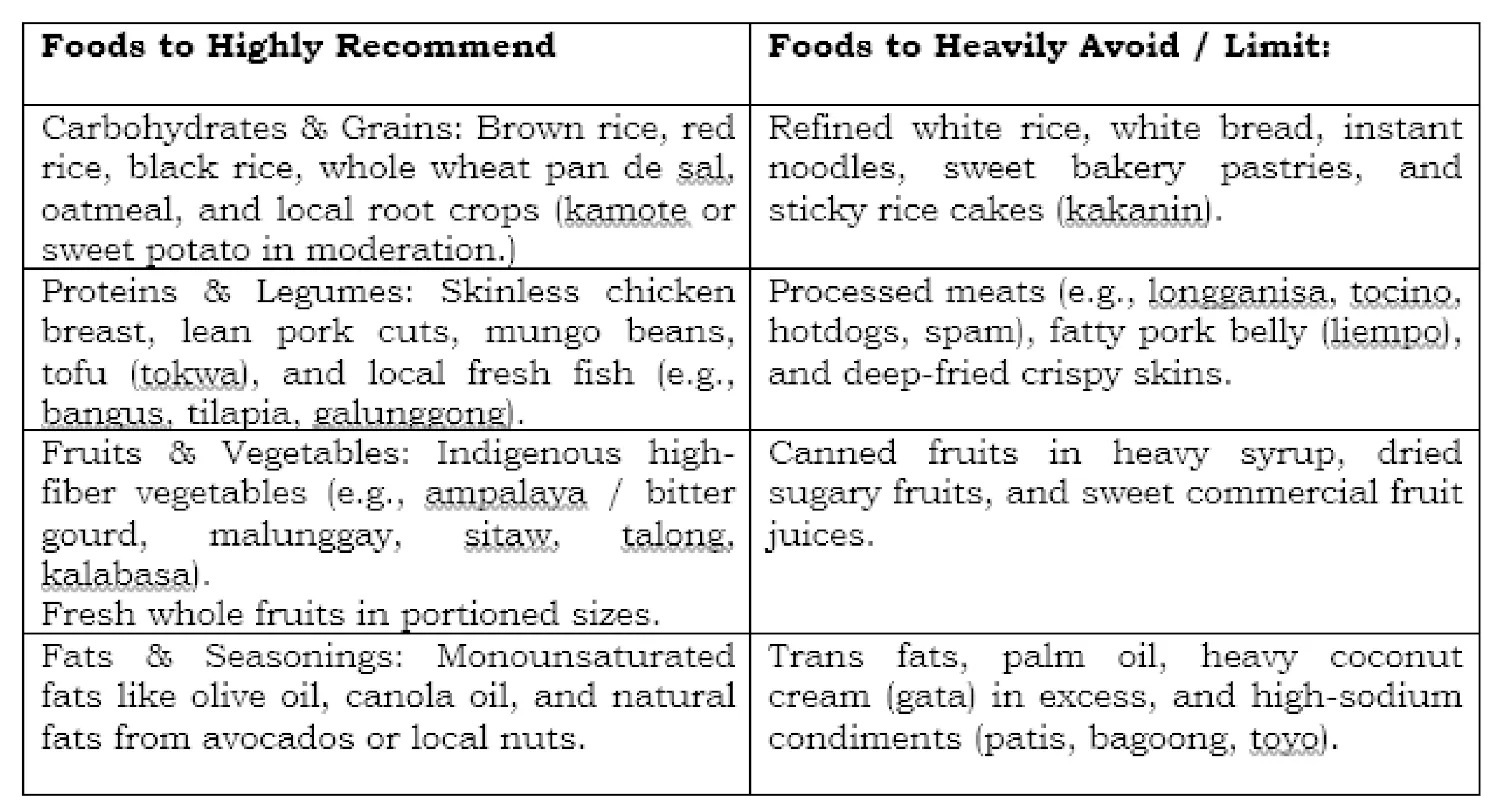 Looking at the bigger picture of this dietary concern, there is a trend of farm-to-table nutrition. Promoting the consumption of whole packed foods and organic farm-to-table produce bypasses the chemical additives and simple sugars found in ultra-processed goods. (Susan M. Bustamante, RND, MSCN)
No Comments