

Seven-Day Pilgrimage of Peace: Pilgrim Relic of St. Francis of Assisi Completes Visit to the Archdiocese of Davao
The Pilgrim Relic of St. Francis of Assisi concluded its seven-day National Visit to the Archdiocese of Davao on November 19, 2026, bringing together the faithful and Franciscan communities in a spiritual celebration of the 800th Anniversary of the Transitus of the beloved saint (1226–2026).
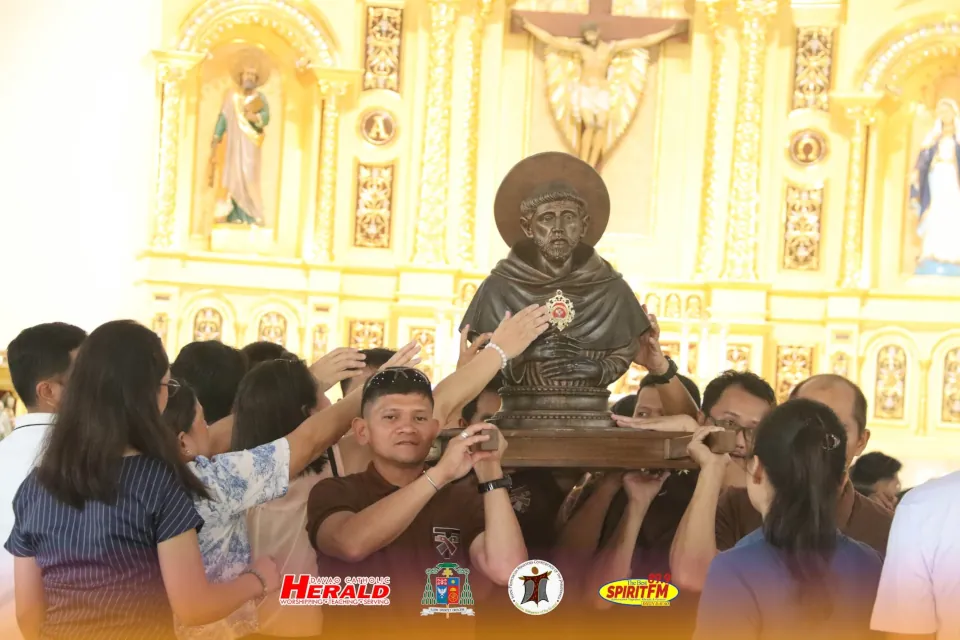
From November 13 to 19, the sacred bone relic of St. Francis journeyed through different parishes including the three parishes in the Archdiocese bearing his name as patron: San Francisco de Asis Parish in Tagakpan, St. Francis of Assisi Parish in La Verna Hills, and St. Francis of Assisi Parish in Maa. The pilgrimage also included a visit to the Franciscan Capuchin community, while Sto. Rosario Parish in Toril served as the point of arrival and welcome before the relic proceeded to San Pedro Cathedral. Throughout the seven-day visit, the faithful were given opportunities for prayer, Eucharistic celebrations, veneration, and deeper reflection on the life and spirituality of the saint.
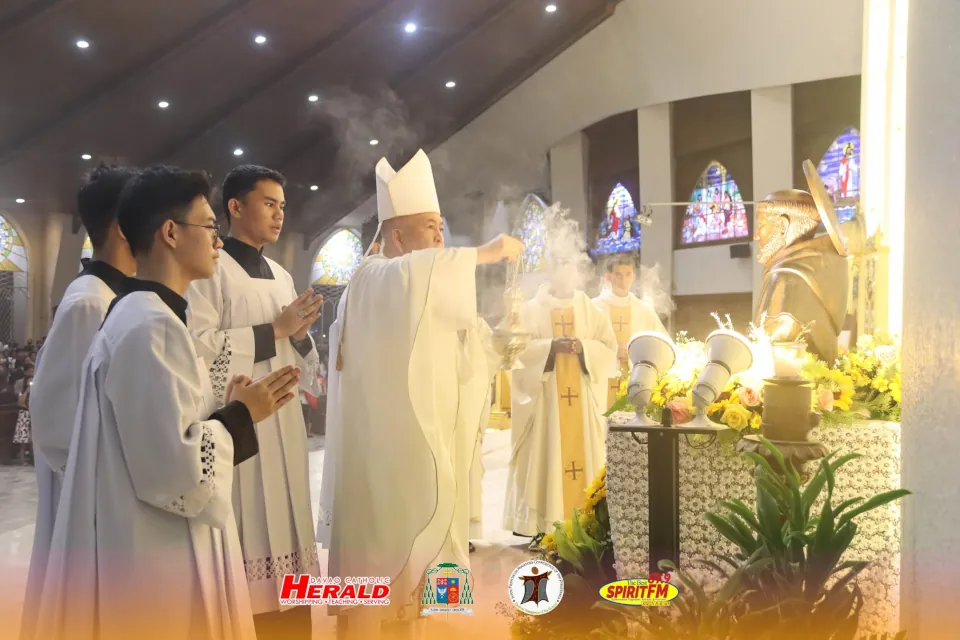
The visit began at Sto. Rosario Parish, Toril, on November 13, where the relic was welcomed through a Holy Mass in honor of St. Francis, followed by a motorcade to San Pedro Cathedral for the Archdiocesan Welcome Mass. The following day, the faithful gathered at the Cathedral for the veneration of the relic and additional Eucharistic celebrations.
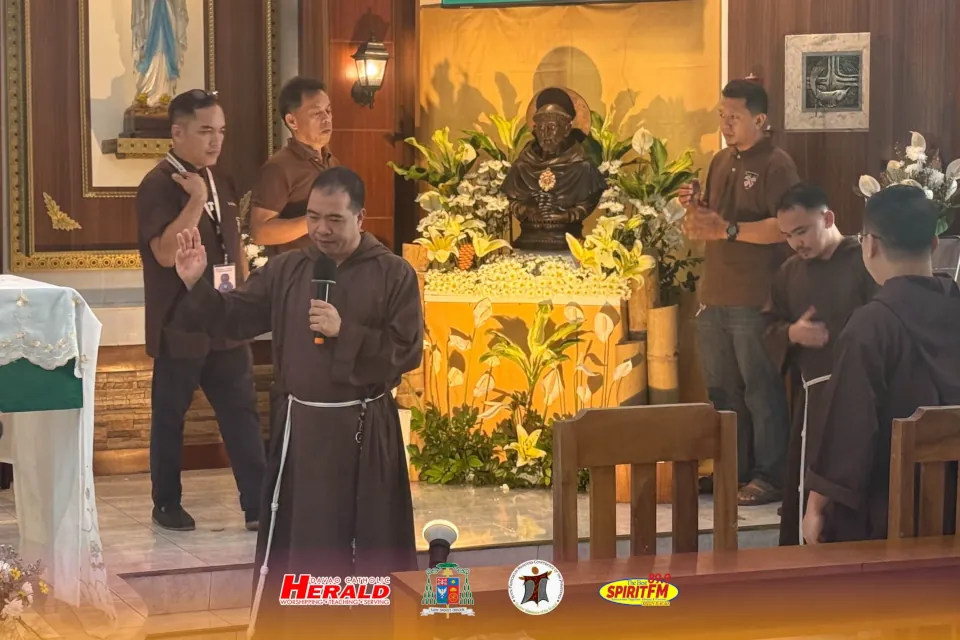
On November 15, the relic proceeded to San Francisco de Asis Parish in Tagakpan, where the community welcomed it with festivities, Holy Mass, veneration, and an overnight vigil. It then continued to St. Francis of Assisi Parish in La Verna Hills on November 16, where the faithful once again gathered in prayer and devotion. The pilgrimage also brought the relic to the Franciscan Capuchin community on November 17, coinciding with a Holy Mass and the Profession of Vows. This provided a significant moment for members of the Franciscan family to renew their commitment to religious life and the spirituality of their founder.
The journey continued to St. Francis of Assisi Parish in Maa on November 18, where the relic was welcomed for another Eucharistic celebration, veneration, and overnight vigil. The seven-day visit concluded with a Farewell Mass on November 19 before the relic departed for Sto. Niño Mission Station in Lampanusan, Kalilangan, Bukidnon, continuing its national pilgrimage.
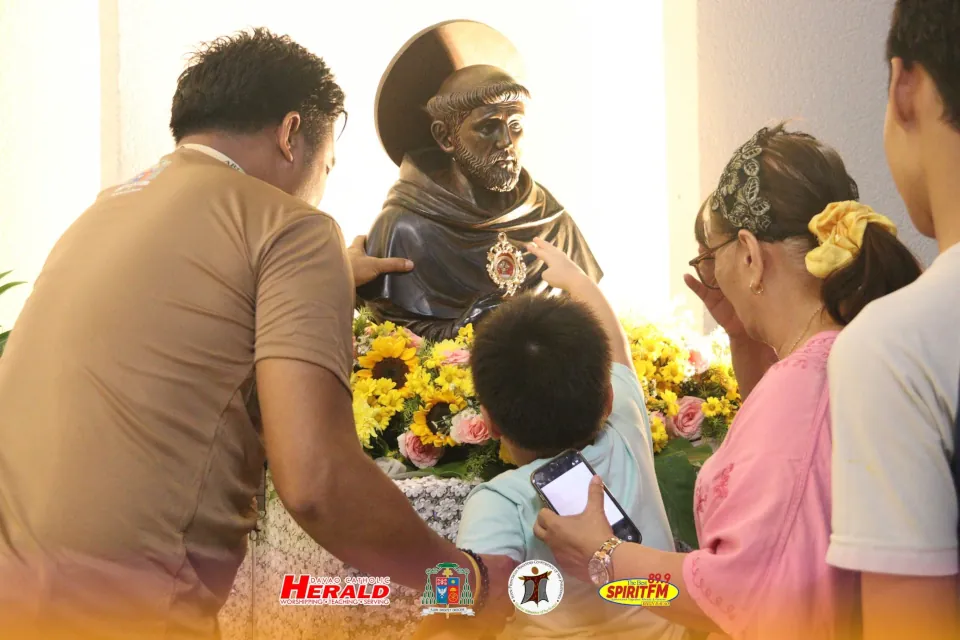
For the Archdiocese of Davao, the visit was indeed a blessing and a special moment of grace, as it once again welcomed a sacred relic of a saint into its local Church. Following the previous visit of the relic of St. Sharbel, the arrival of the relic of St. Francis of Assisi offered another opportunity for the faithful to encounter the enduring witness of holiness through the lives of the saints. These occasions remind the local Church that the communion of saints is not merely a teaching of faith but a living spiritual reality that continues to inspire Christians in their journey toward God. Through the veneration of their relics, the faithful are drawn not simply to the material remains of those who have gone before them, but to remember their lives, imitate their virtues, and renew their commitment to holiness.
The visit became an invitation for the local Church to rediscover the enduring relevance of St. Francis’ life and witness. As the Church marks the 800th anniversary of his Transitus, the celebration remembers not only his death on October 3, 1226, but also the life of a man who embraced the Gospel through poverty, humility, fraternity, and an extraordinary love for God and all creation.
Among the most enduring expressions of Franciscan spirituality is the prayer, “Lord, make me a channel of your peace.” Often associated with the spirituality of St. Francis, this prayer captures the heart of a Christian life that does not merely seek peace but actively becomes a bearer of it.
Its message remains especially meaningful amid the realities of today’s world, where conflicts, violence, discrimination, poverty, environmental destruction, and divisions continue to wound communities and separate people from one another. Even in ordinary spaces, hatred can take root through hurtful words, indifference, prejudice, and the refusal to understand those whose experiences differ from our own.
In such a world, the prayer challenges Christians to become instruments of reconciliation rather than sources of division; to bring forgiveness where there is resentment, understanding where there is misunderstanding, hope where there is despair, and love where there is hatred. It reminds the faithful that peace is not simply the absence of conflict but a commitment to recognize the dignity of every person and to respond to others with compassion and justice.
This call also finds expression in the everyday life of the Church, particularly in its parish communities and Gagmay’ng Kristohanong Katilingban (GKKs). The Franciscan spirit of fraternity invites every member of the Church to build communities where people are welcomed, the poor and vulnerable are cared for, differences are embraced, and faith is translated into concrete acts of service. Through simple gestures of kindness, reconciliation among neighbors, care for creation, and solidarity with those in need, the faithful can make peace visible in their own communities.
As the Pilgrim Relic continues its journey beyond the Archdiocese of Davao, the spiritual fruits of its visit are entrusted to the faithful who encountered it. The relic may have departed, but the invitation of St. Francis remains: to live simply, love generously, care for creation, embrace one another as brothers and sisters, and become instruments of God’s peace in a world deeply longing for it.
Eight hundred years after his Transitus, St. Francis’ witness continues to speak across generations, reminding the Church that peace begins not only in nations and institutions but also in the hearts of those willing to become its instruments.
“Lord, make me an instrument of your peace.”
No Comments